Two things that can't wait
If someone with diabetes can't swallow or won't wake up, don't give them food or drink. Give glucagon if you have it and know how, and call 911. Signs of DKA (vomiting, belly pain, trouble breathing, confusion) also need help right away.
Featured partnerFREE TO PLAY
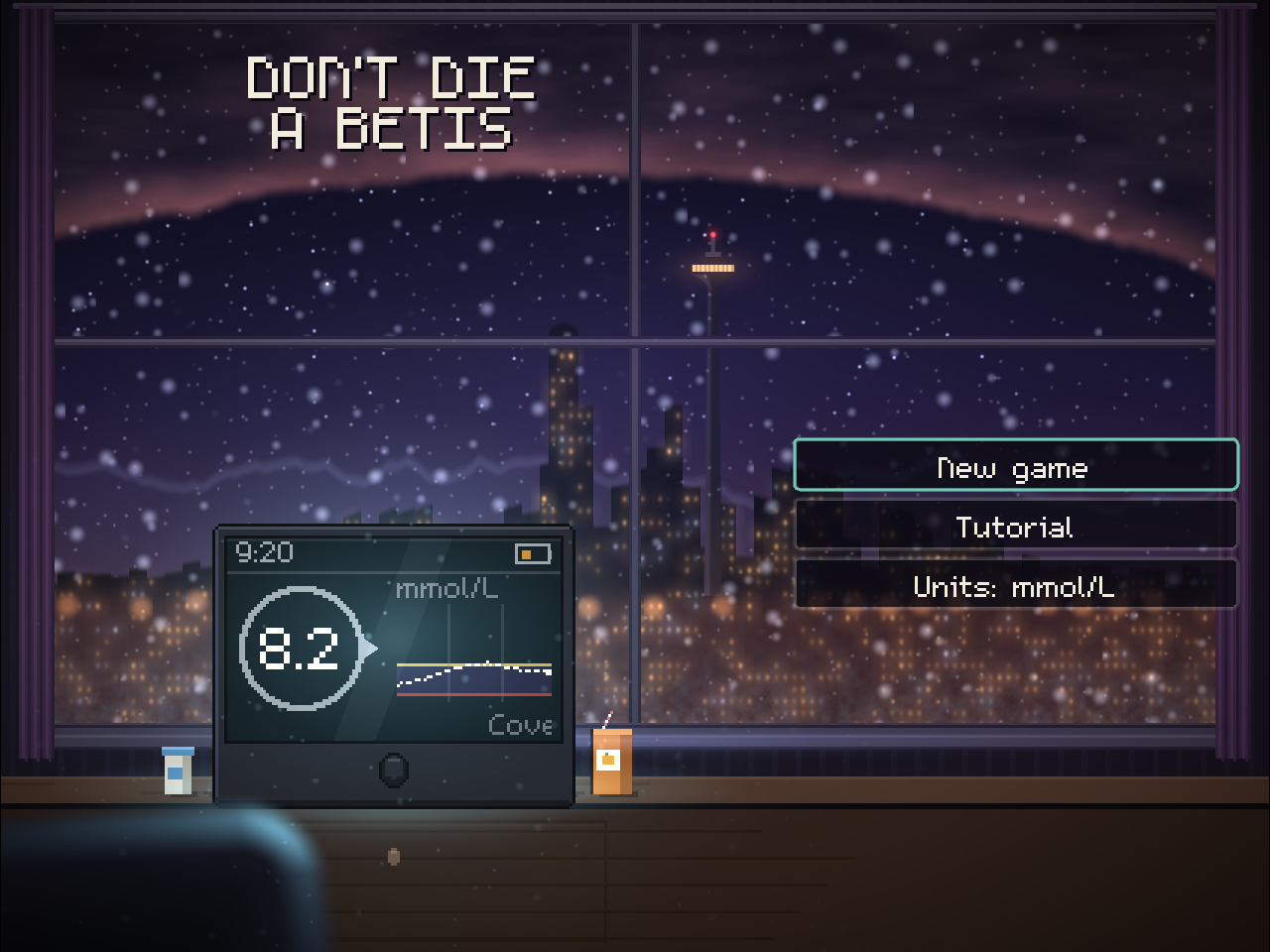
Don't Die a Betis
A beat 'em up about type 1, set in Calgary. Count carbs, dodge the Cinnamon Guy, and find a washroom before it is too late.
Play in your browserRead the instruction booklet.
What to expect
A type 1 diagnosis comes with a lot of new information in a short time. Your diabetes care team will teach you the basics first and add more over the following weeks and months.
There is no one plan that suits everyone. Your team will set your blood sugar target range and your insulin plan with you. It takes time to fine-tune an insulin routine, so expect your doses and your plan to change as your team learns how your body responds.
Expect some numbers to surprise you. That is part of learning, and it does not mean you are doing it wrong. Write down your questions as they come up, and bring them to your next visit.
The skills you learn first
Most people start with these:
Checking your blood sugar. How to do a finger check or read a CGM, your target range, and when to check. See Checking your blood sugar.
Taking insulin. Which insulins you take, what each one does, when to take it, and how to give it with a pen, syringe or pump. See Insulin.
Spotting and treating a low. The signs of low blood sugar and the 15 g rule. See Treating a low.
Carbohydrate basics. Which foods raise blood sugar, and how counting carbs helps you match insulin to food. See Carb counting.
Highs, ketones and sick days. When to check for ketones and what to do when you are ill. See Highs and ketones and Sick days.
If you are having lows often, tell your team. Your insulin plan may need to change.
Your supplies
Your team and pharmacist will tell you exactly what you need. Most people with type 1 have:
- Insulin in pens, or vials with syringes, and the needles that go with them. Each type of insulin needs its own pen.
- A way to check blood sugar: a meter with test strips and lancets (the small needles for finger checks), or a CGM.
- A sharps container for used pen tips and lancets. Many pharmacies supply one.
- Fast-acting sugar, such as glucose tablets or juice, with you at home and whenever you go out.
- Glucagon, a prescription medicine for a severe low, and people around you who know how to use it.
- A card in your wallet that says you have diabetes, or diabetes identification such as a medical ID bracelet.
Ask your team whether you should have a way to check ketones at home too.
Storing insulin: check the information that comes with your insulin, or ask your team. The insulin you are using can usually stay at room temperature for up to 30 days. Throw out insulin that has frozen, been above 30°C, or expired.
Feeling overwhelmed is normal
Many people feel overwhelmed, angry, worried or scared after a diagnosis. Parents and other family members can feel this way too. These feelings can come and go, and they are a normal response.
Talking helps: to family, a friend, someone else with diabetes, or your team. Caring for your mental health is as important as caring for your blood sugar. If you still feel down a couple of months after your diagnosis, tell your doctor. See Diabetes distress and burnout.
Telling people
Who you tell is up to you. It helps if the people you spend the most time with, at home, at work and in your social life, know how to spot a low and what to do. Diabetes Canada recommends that the people close to anyone who takes insulin learn to recognize and treat a low and how to give glucagon.
You do not have to explain everything at once. Start with what someone should do if you are low. See Family and friends.
School and work
At school: in Alberta, the province's guidelines say a student with type 1 can have an individual care plan. The parents, the school, the student where appropriate, and health-care professionals write it together. It covers daily care at school, who does what, emergency contacts, and what to do in an emergency. Other provinces have their own rules, so ask your child's school and your team.
At work: you do not have to tell your employer about a new diagnosis unless you want to or you need an accommodation. Some jobs with safety requirements, such as commercial driving or flying, are exceptions. Type 1 is a disability under Canadian human rights law, and employers must accommodate it up to the point of undue hardship. That can mean breaks for snacks or insulin, a private place to check or inject, and time off for appointments. Breakthrough T1D suggests that at least one trusted coworker knows what to do in an emergency.
See School and work.
Questions to ask your team
- What is my target range, and when should I check?
- Which insulins do I take, when, and what do I do if I miss a dose?
- What should I do for a low, and when should I call you?
- When should I check for ketones, and what is my sick-day plan?
- Can I have a prescription for glucagon, and will you show my family how to use it?
- How do I reach the team between visits?
- Do you offer classes for newly diagnosed people?
- Who can help me with the cost of supplies?

Try playing Don't Die a Betis.
Play in your browserFollow your own diabetes care team. This page explains the general advice. Your doctor, nurse educator and dietitian know your body and your insulin, and their plan comes first.
Sources
- Diabetes Canada. Type 1 diabetes toolkit.
- Diabetes Canada. Getting started with insulin.
- Diabetes Canada. Mental health and diabetes.
- Diabetes Canada. Signs and symptoms.
- Diabetes Canada Clinical Practice Guidelines. Chapter 14: Hypoglycemia in adults, 2023 update.
- Breakthrough T1D Canada. T1D in the workplace.
- Alberta Education, Government of Alberta. Guidelines for Supporting Students with Type 1 Diabetes in Schools (2019).
Checked against these sources in November 2026.