If they can't swallow or won't wake up
Don't give them food or drink. Give glucagon if you have it and know how, and call 911.
Featured partnerFREE TO PLAY
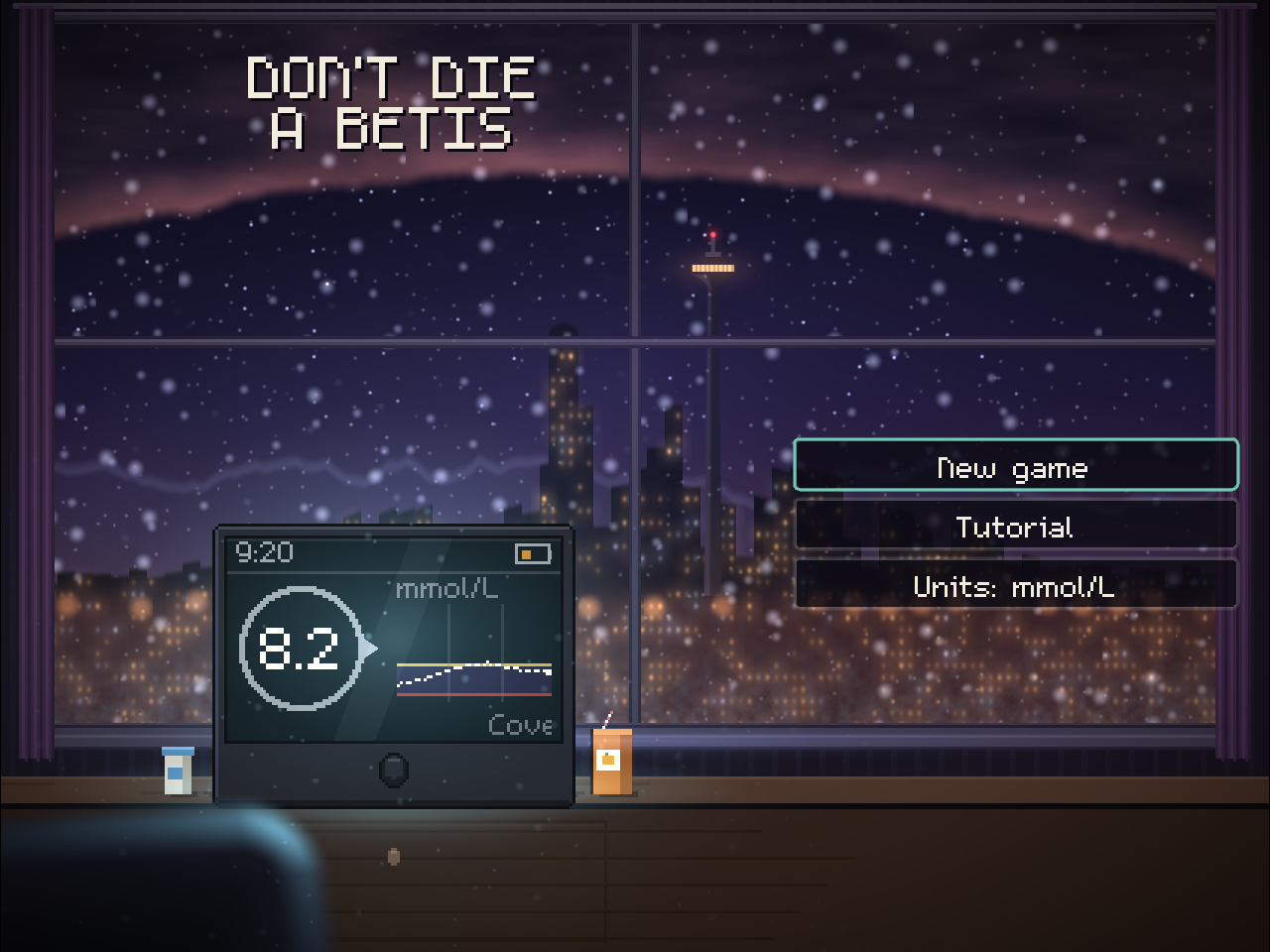
Don't Die a Betis
A beat 'em up about type 1, set in Calgary. Count carbs, dodge the Cinnamon Guy, and find a washroom before it is too late.
Play in your browserRead the instruction booklet.
How the people around you can help
Talking with friends and family about how you are feeling can help. So can telling them what kind of help you want, and what you don't.
Some people want a reminder to check. Others would rather not be asked about their numbers at dinner. Let people know which you prefer.
Lows can be hard on the people close to you too. Family members often feel responsible for helping, and a partner's sleep can be disturbed by night-time lows. Fear of lows is common for them as well as for you, and it is worth talking about together, and with your team.
What to tell them about lows
Diabetes Canada recommends that the friends, family and coworkers of anyone at risk of lows learn how to recognize and treat one. Tell the people you spend time with:
What a low looks like for you. Common signs are shaking, sweating, a pounding heart, hunger, anxiety, headache, confusion, trouble concentrating or speaking, and drowsiness.
Where you keep fast-acting sugar. If you are low and able to swallow, you need 15 g of fast-acting sugar, such as ½ cup (125 mL) of juice or glucose tablets.
That it takes 15 minutes. After treating, wait 15 minutes and check again. Treat again if still below 3.9 mmol/L.
Where your glucagon is, and how to use it. If you can't swallow or won't wake up, nothing goes in your mouth. They give glucagon if they know how, and call 911.
Ask your team to show the people close to you how to use glucagon. Wearing diabetes identification, such as a medical ID bracelet, helps strangers know what is happening. See Treating a low for the full steps.
Unsolicited advice
Many people with type 1 get advice they did not ask for: a diet, a supplement, a story about someone's uncle. Most of it is meant kindly. Much of it is meant for type 2, or is not true at all.
A few facts can help you answer:
- Type 1 is an autoimmune condition. It is not caused by diet or lifestyle.
- There is no cure yet, and people do not grow out of it.
- People with type 1 need insulin to live. No food or supplement replaces it.
You don't owe anyone an explanation. "Thanks, my team and I have a plan" is a complete answer.
When people judge
Feeling judged about diabetes is common. Diabetes Canada's guidelines note that it can lower your sense of well-being and make it harder to stay motivated with your care.
Checking your blood sugar and taking insulin are medical care. At work, type 1 is a disability under Canadian human rights law, and an accommodation can include a private place to check or inject. Where you check or inject is up to you.
If judgement is wearing you down, tell your team. See Diabetes distress and burnout.
For parents and caregivers
Caring for a child or partner with type 1 is real work, and it is normal to find it hard. Diabetes Canada's guidelines recommend that parents and caregivers of young people with diabetes are checked for diabetes distress too. Tell your child's team how you are coping.
- At school: in Alberta, the province's guidelines describe an individual care plan for a student with type 1. Parents give the school their child's medical information and help write the plan with the school and health-care professionals. See School and work.
- Talking to other parents: Breakthrough T1D Canada runs a peer-led conversation for parents and caregivers of newly diagnosed children, and a monthly virtual meetup for parents. See Finding your people.
- Free kits: Breakthrough T1D Canada offers a Bag of Hope for children aged 0 to 12 and a Teen Care Kit for ages 13 to 18.
Follow your own diabetes care team. This page explains the general advice. Your doctor, nurse educator and dietitian know your body and your insulin, and their plan comes first.
Sources
- Diabetes Canada Clinical Practice Guidelines. Chapter 14: Hypoglycemia in adults, 2023 update.
- Diabetes Canada Clinical Practice Guidelines. Chapter 18: Mental health and diabetes, 2023 update.
- Diabetes Canada. Hypoglycemia: low blood sugar in adults (patient handout, 2024).
- Breakthrough T1D Canada. What is type 1 diabetes?
- Breakthrough T1D Canada. Mental health.
- Breakthrough T1D Canada. T1D in the workplace.
- Breakthrough T1D Canada. Peer support.
- Breakthrough T1D Canada. Newly diagnosed adults.
- Alberta Education, Government of Alberta. Guidelines for Supporting Students with Type 1 Diabetes in Schools (2019).
Checked against these sources in November 2026.