If someone can't swallow or won't wake up
Don't give them food or drink. Give glucagon if you have it and know how, and call 911.
Featured partnerFREE TO PLAY
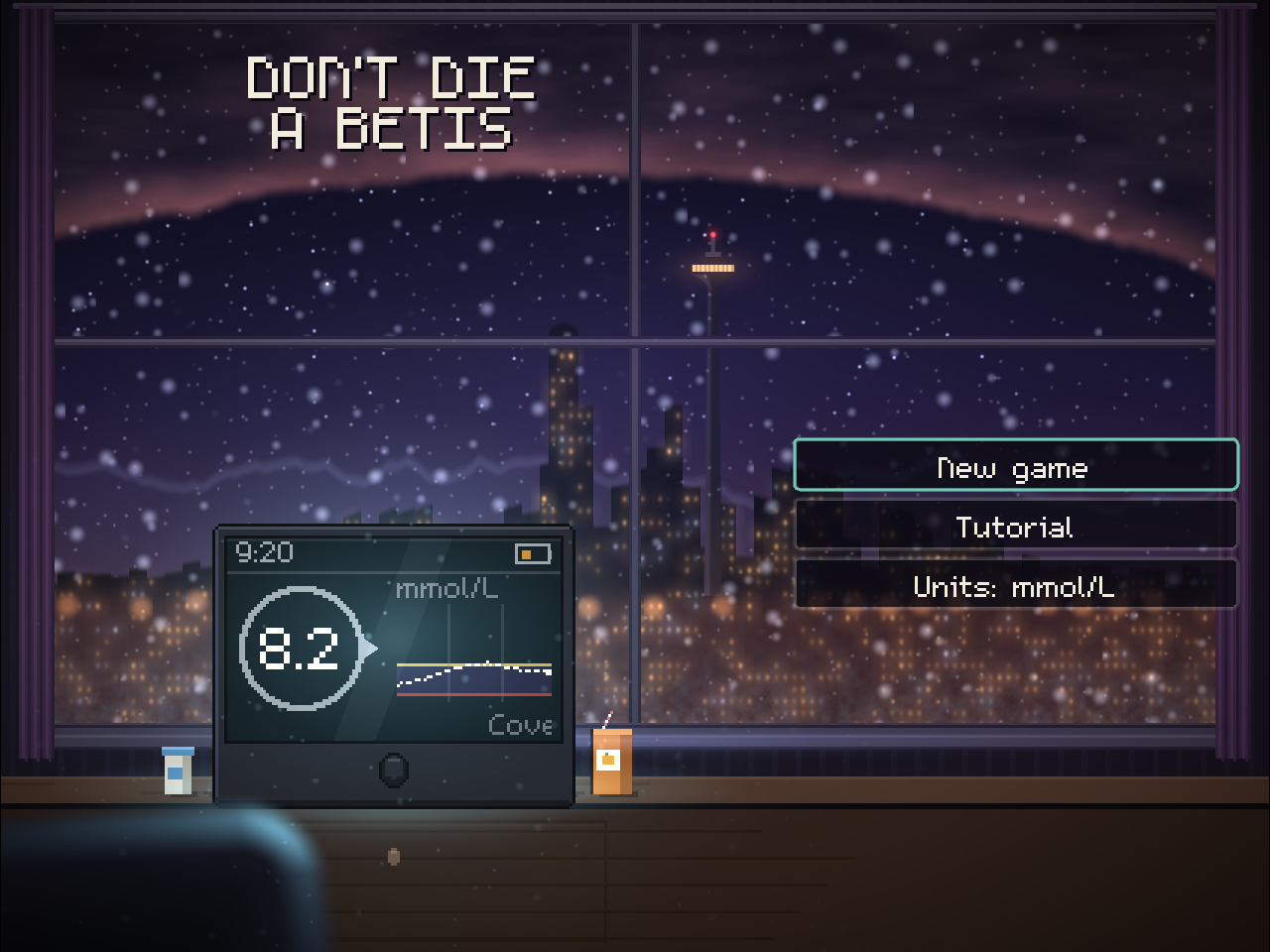
Don't Die a Betis
A beat 'em up about type 1, set in Calgary. Count carbs, dodge the Cinnamon Guy, and find a washroom before it is too late.
Play in your browserRead the instruction booklet.
What a low is
Low blood sugar, or hypoglycemia, is a blood sugar below your target range. Diabetes Canada counts a blood sugar below 3.9 mmol/L as low. Your diabetes team may give you a different number to act on.
Lows happen when there is more insulin working than your body needs. The usual reasons are eating less than planned, eating later than usual, taking more insulin than planned, being more active than usual, or drinking alcohol in the past 24 hours.
Lows are a common part of taking insulin. Having one does not mean you have done something wrong.
The signs
Everyone has their own way of noticing a low. Common early signs are:
- shaking or trembling, sweating, a pounding heart
- feeling anxious, hungry or sick to your stomach
- tingling, often around the mouth
As the low gets deeper, the brain runs short of sugar. Then you may notice:
- trouble concentrating, confusion, drowsiness, weakness or dizziness
- blurred vision, headache, or trouble speaking
- at night: disturbed sleep or strange dreams
If you feel low, check your blood sugar right away. If you can't check, treat it anyway. It is safer to treat a low you are not sure of than to wait.
How to treat a low
If you are able to swallow:
Eat or drink 15 g of fast-acting sugar. Any one of these:
- glucose tablets that add up to 15 g (check the label)
- ½ cup (125 mL) of juice or regular, not diet, soft drink
- 1 tablespoon (15 mL) of sugar dissolved in water
- 1 tablespoon (15 mL) of honey
Wait 15 minutes, then check again.
Still below 3.9 mmol/L? Treat again with another 15 g, then wait and check again.
Once you are back in range, eat. If your next meal or snack is due within the hour, have it as usual. If it is more than an hour away, have a snack with carbohydrate and protein, such as a slice of bread or 7 crackers with a piece of cheese or 2 tablespoons of peanut butter.
Diabetes Canada recommends glucose or table sugar first, as tablets or dissolved in water. Ask your team which treatment suits you, and how to handle your insulin at the meal after a low.
Severe lows and glucagon
A low is severe when the person needs someone else's help to treat it: they are too confused, too drowsy or not able to swallow safely.
- Awake and able to swallow: give 20 g of fast-acting sugar, such as glucose tablets. Then wait 15 minutes and check again.
- Not able to swallow, or unconscious: do not put food or drink in their mouth. Give glucagon if it is there and you have been shown how, and call 911.
Glucagon is a hormone that raises blood sugar. It comes as a nasal powder or an injection, and it needs a prescription. Diabetes Canada recommends that everyone who takes insulin has glucagon, and that the people around them learn how to use it. Ask your team for a prescription and to show you, and the people close to you, how to use it.
Call 911 when
- the person is unconscious or can't swallow safely
- you are not sure what is happening
Emergency: 911
After a low
Driving: after treating a low, wait until your blood sugar is above 5.0 mmol/L before you drive. Your brain may need up to 40 minutes to recover, even once the number looks fine. See Driving with type 1.
If you are having lows often, at the same time of day, at night, or without warning signs, tell your team. Fear of lows is very common, and it is worth talking about too. Your team can help with both.
Be ready for the next one
- Keep fast-acting sugar with you, in your bag, car, coat and bedside table.
- Teach the people you live, work and play with what a low looks like and what to do.
- Know your own reasons for lows: a skipped or late meal, extra activity, more insulin than planned, or alcohol.
Follow your own diabetes care team. This page explains the general advice. Your doctor, nurse educator and dietitian know your body and your insulin, and their plan comes first.
Sources
- Diabetes Canada. Hypoglycemia: low blood sugar in adults (patient handout, 2024).
- Diabetes Canada. Low blood sugar (hypoglycemia).
- Diabetes Canada Clinical Practice Guidelines. Chapter 14: Hypoglycemia in adults, 2023 update.
Checked against these sources in November 2026.