Low at the wheel?
Pull over somewhere safe, turn the car off and take the keys out, then treat the low. If a driver or passenger can't swallow or won't wake up, give glucagon if you have it and know how, and call 911.
Featured partnerFREE TO PLAY
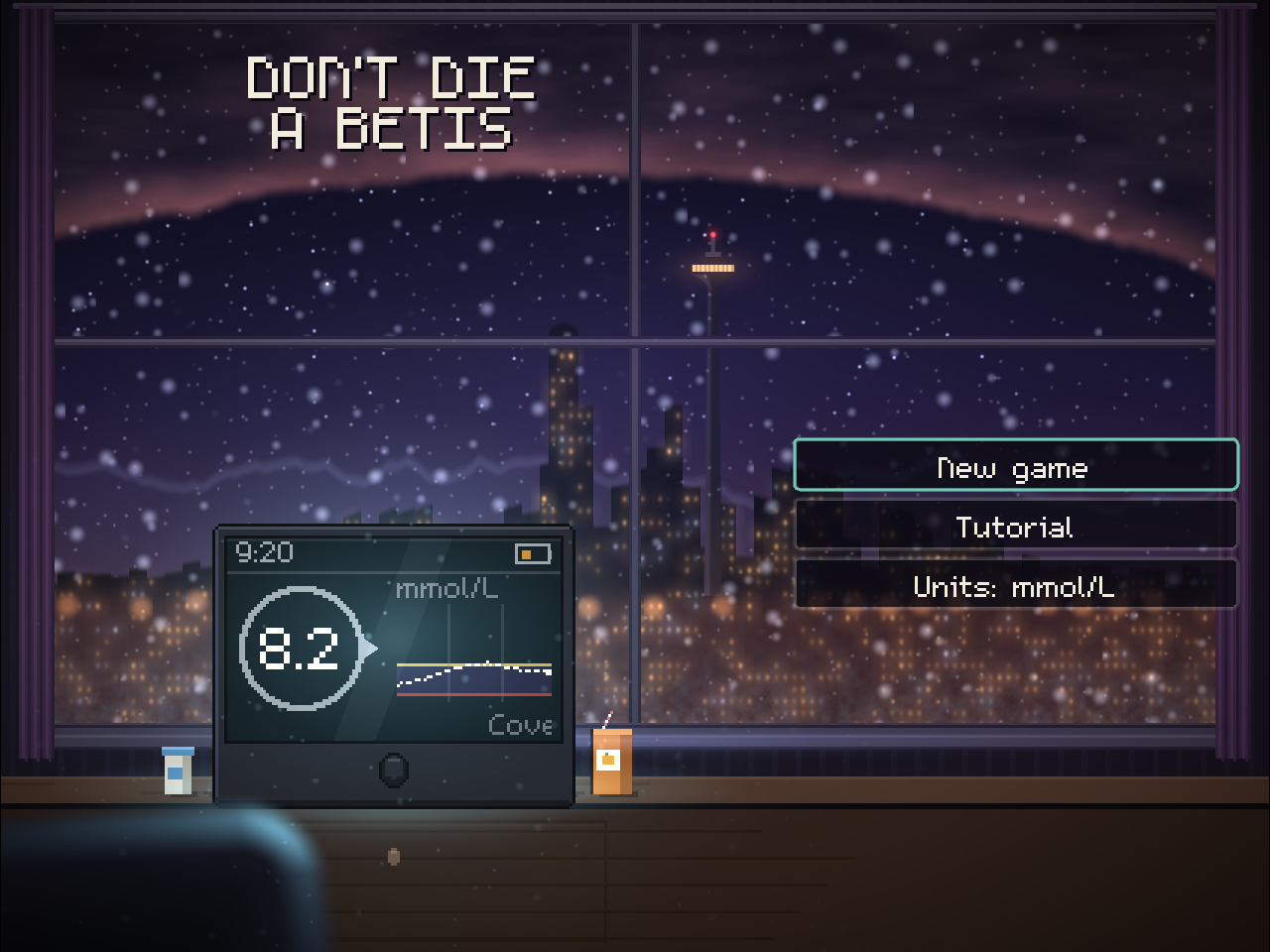
Don't Die a Betis
A beat 'em up about type 1, set in Calgary. Count carbs, dodge the Cinnamon Guy, and find a washroom before it is too late.
Play in your browserRead the instruction booklet.
Why lows matter on the road
A low blood sugar slows your thinking and reactions, and you may not notice it happening. In studies of people with type 1, driving got worse once blood sugar fell below about 3.8 mmol/L, and in one study fewer than a quarter of drivers realized their driving had changed.
Driving itself can also lower blood sugar. The risk is higher if you have had a severe low in the past two years, a low while driving before, or lows without warning signs.
Before you drive
- Check your blood sugar right before you drive, or wear a CGM (continuous glucose monitor) that shows it live.
- Don't start driving below 4.0 mmol/L. Treat the low with 15 g of fast-acting sugar, check again, and wait until you are at least 5.0 mmol/L. Then wait about 40 minutes more, because your judgment and reflexes take that long to recover fully.
- Keep fast sugar within easy reach inside the car, such as glucose tablets, and carry your meter and supplies.
- Check more often if a low is more likely: after exercise, or when a meal is late or skipped.
If you have had repeated severe lows, or you don't feel the early signs of a low (such as shaking, sweating or a pounding heart), Diabetes Canada says you must check right before you drive and at least every 2 hours while driving, or wear a CGM.
If you go low while driving
Stop the car somewhere safe. Turn it off and take the keys out of the ignition.
Treat the low with 15 g of fast-acting sugar. See Treating a low.
Check again after 15 minutes, and treat again if you are still below 4.0 mmol/L.
Don't drive again until you are at least 5.0 mmol/L, and give yourself about 40 minutes after treating it before you set off.
Longer trips
On a long drive, stop for regular meals, snacks and rest. Check before you set off and at least every 4 hours on the road, or follow your CGM. Keep your fast sugar in the car, not in the trunk.
Your licence and reporting
Licensing rules in Canada are set by each province and territory, and they differ. Check with your own provincial or territorial licensing authority for the rules where you live. Commercial licences have stricter medical rules than private ones.
- A regular medical check. Diabetes Canada recommends that every driver with diabetes has a medical exam to check fitness to drive at least every 2 years.
- When to tell someone. Diabetes Canada says to tell your health-care provider and your licensing body straight away if you have a severe low while driving. Do the same if you have more than one severe low while awake in 6 months, or in 12 months if you drive commercially. A severe low is one where you need someone else's help.
- Doctors' reporting. When Diabetes Canada's driving guidelines were written in 2018, doctors in most provinces and territories had to report a patient they believed was not fit to drive. In Alberta, Nova Scotia and Quebec, doctors could choose whether to report.
- In Alberta, the law requires you to report any medical condition or change in your health that may affect your ability to drive safely. Alberta uses the national medical standard for drivers (National Safety Code Standard 6) to decide fitness to drive.
A diagnosis of type 1 does not, on its own, stop you driving. Fitness to drive is decided person by person.
Follow your own diabetes care team. This page explains the general advice. Your doctor, nurse educator and dietitian know your body and your insulin, and their plan comes first.
Sources
- Diabetes Canada Clinical Practice Guidelines. Chapter 21: Diabetes and driving (2018).
- Government of Alberta. Driver medical fitness.
- Government of Alberta. Driver medical fitness review.
Checked against these sources in November 2026.