High blood sugar and feeling very unwell
Vomiting, belly pain, fast or deep breathing, fruity-smelling breath, confusion or trouble staying awake can mean DKA. Go to the emergency department now, or call 911.
Featured partnerFREE TO PLAY
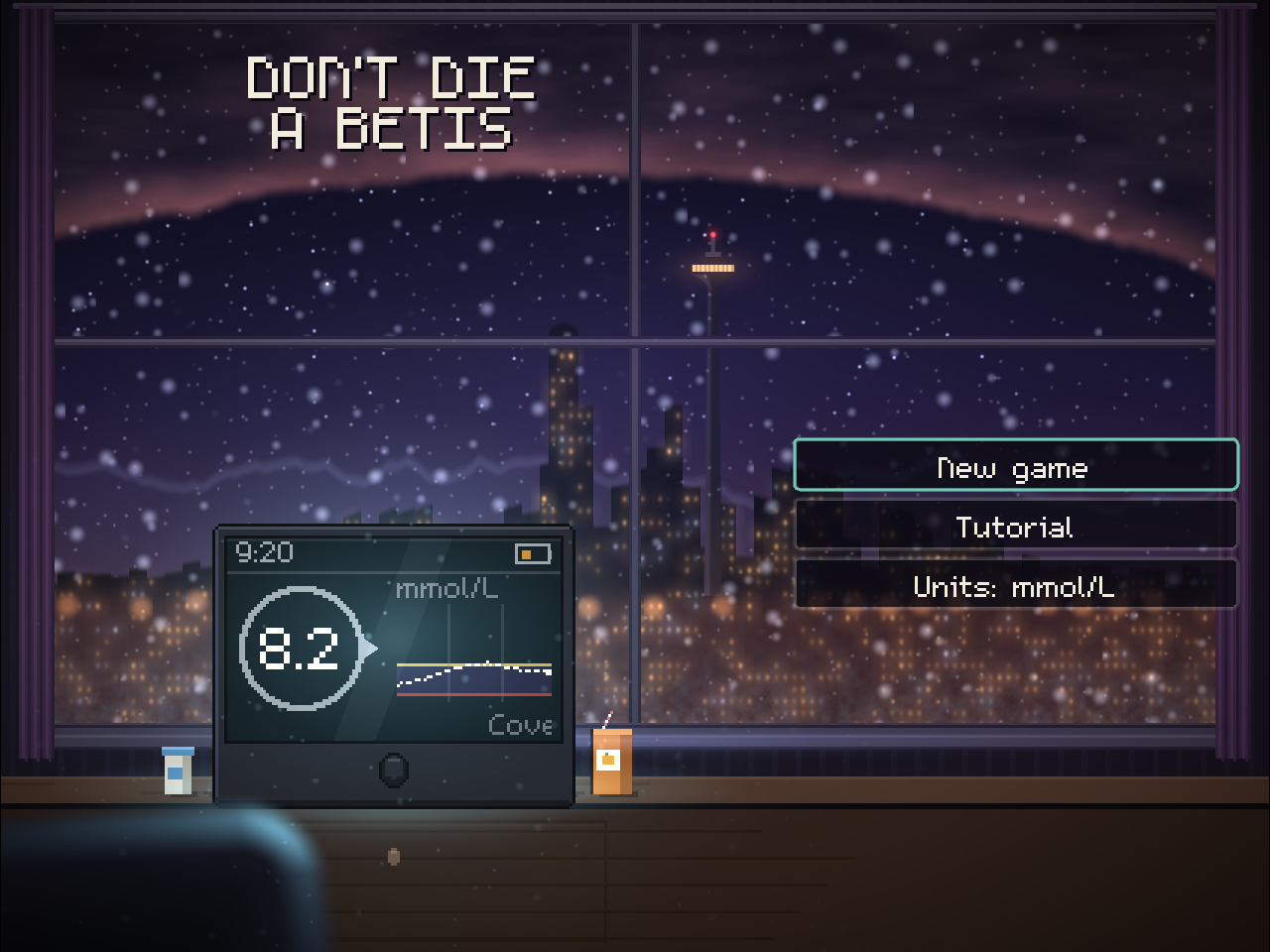
Don't Die a Betis
A beat 'em up about type 1, set in Calgary. Count carbs, dodge the Cinnamon Guy, and find a washroom before it is too late.
Play in your browserRead the instruction booklet.
What a high is
High blood sugar, or hyperglycemia, is a blood sugar above your target range. Your team sets your range with you. See Checking your blood sugar for Diabetes Canada's general targets.
Everyone with type 1 has highs sometimes. One high reading is not a failure. It usually builds slowly over hours or days, which gives you time to act if you check often.
The signs
Common signs of high blood sugar are:
- feeling thirsty
- needing to pee more often than usual, especially at night
- feeling more tired than usual
You may not feel anything at all. That is one reason to check regularly, especially when you are sick or your routine has changed.
Common causes
Highs happen when food, activity and insulin are out of balance. Common reasons are:
- missing a dose of insulin, or taking less than you needed
- eating more carbohydrate than usual
- being sick, or having an infection
- stress
- treating a low with more sugar than you needed
- being less active than usual
- starting or changing some medicines, such as corticosteroids and some decongestants
If you take insulin, you may sometimes wake up high even after going to bed in range. Tell your team if this happens. They may ask you to check during the night to find out why.
What to do
Follow the plan your team gave you for bringing a high down. That is usually a correction dose of your mealtime insulin, worked out with your team.
Drink water or other sugar-free drinks. Avoid juice, regular pop, caffeinated drinks and alcohol.
Check for ketones if your blood sugar stays over 14 mmol/L before meals, or if you feel unwell. See the next section.
Don't skip or change your insulin without talking to your team first.
If you have high blood sugar often, or more than usual, call your team. You may need changes to your insulin, your eating or your activity.
Checking for ketones
When there is not enough insulin, your body can't use sugar for energy, so it breaks down fat instead. That makes ketones, acids that build up in the blood and can make you very sick.
Check for ketones when:
- your blood sugar stays over 14 mmol/L before meals
- you have any signs of DKA (listed below)
- you are sick, especially with vomiting, belly pain or a fever
- your blood sugar is high and you are about to exercise
Blood or urine? You can test with a blood ketone meter and strips, or with urine test strips. Diabetes Canada's guidelines prefer blood testing. Breakthrough T1D Canada explains why: a blood test is more precise, while urine can show ketones that have been sitting in your bladder for a while. Some blood sugar meters can also read blood ketone strips.
Breakthrough T1D Canada gives this general guide for blood ketones. Your team's ketone plan comes first.
| Blood ketones | What it means |
|---|---|
| below 0.6 mmol/L | Normal. |
| 0.6 to 1.5 mmol/L | Check closely. If you are sick, call your team and follow your ketone plan. |
| 1.5 to 3.0 mmol/L | Risk of DKA. Call your team right away and follow your ketone plan. |
| above 3.0 mmol/L | A medical emergency. Call your team now, and you may need to go to emergency. |
On urine strips, negative or trace is normal. Small means call your team and follow your plan, moderate means call them right away, and large is a medical emergency. Urine strips go bad: throw out a container that has been open for more than 6 months, and check the expiry date.
Diabetic ketoacidosis (DKA)
DKA happens when the body has too little insulin and ketones build up until they change the chemical balance of the blood. It is life-threatening, and it can make you seriously ill quickly. It is treated in hospital with insulin and fluids, often through a vein.
DKA can be brought on by missing insulin, by an illness or infection such as the flu, or by being very dehydrated. It can also happen around the time type 1 is first diagnosed.
Signs of DKA include:
- being very thirsty and peeing a lot
- weakness or unusual tiredness
- nausea, vomiting or belly pain
- fast, deep breathing, or feeling short of air
- breath that smells fruity
- blurred vision
- confusion, or trouble staying awake or being woken up
Blood sugar is usually high in DKA, but not always. During pregnancy, or if you take a medicine from the group called SGLT2 inhibitors, DKA can happen with a blood sugar that is only a little high or even normal. Check ketones whenever you have the signs, whatever your blood sugar.
When to get emergency help
Get help now
- Go to emergency or call 911 for signs of DKA, such as vomiting, belly pain, fast or deep breathing, or confusion.
- Call 911 if someone is very drowsy, hard to wake, or not making sense.
- Call your team right away, and be ready to go to emergency, if your blood ketones are above 3.0 mmol/L or your urine ketones are large. This is a medical emergency.
Emergency: 911
For ketones that are lower than that, or a high you can't bring down, call your diabetes team for advice. Make sure you know how to reach them at night and on weekends. If you are sick as well, see Sick days.
Follow your own diabetes care team. This page explains the general advice. Your doctor, nurse educator and dietitian know your body and your insulin, and their plan comes first.
Sources
- Diabetes Canada. High blood sugar (hyperglycemia).
- Diabetes Canada Clinical Practice Guidelines. Chapter 15: Hyperglycemic emergencies in adults.
- Breakthrough T1D Canada. Diabetic ketoacidosis (DKA) and ketones.
- HealthLink BC. Diabetic ketoacidosis (DKA) (2023).
- HealthLink BC. Diabetes: preventing high blood sugar emergencies.
- Alberta Health Services. Diabetes, insulin and sick day management (2018).
Checked against these sources in November 2026.