Featured partnerFREE TO PLAY
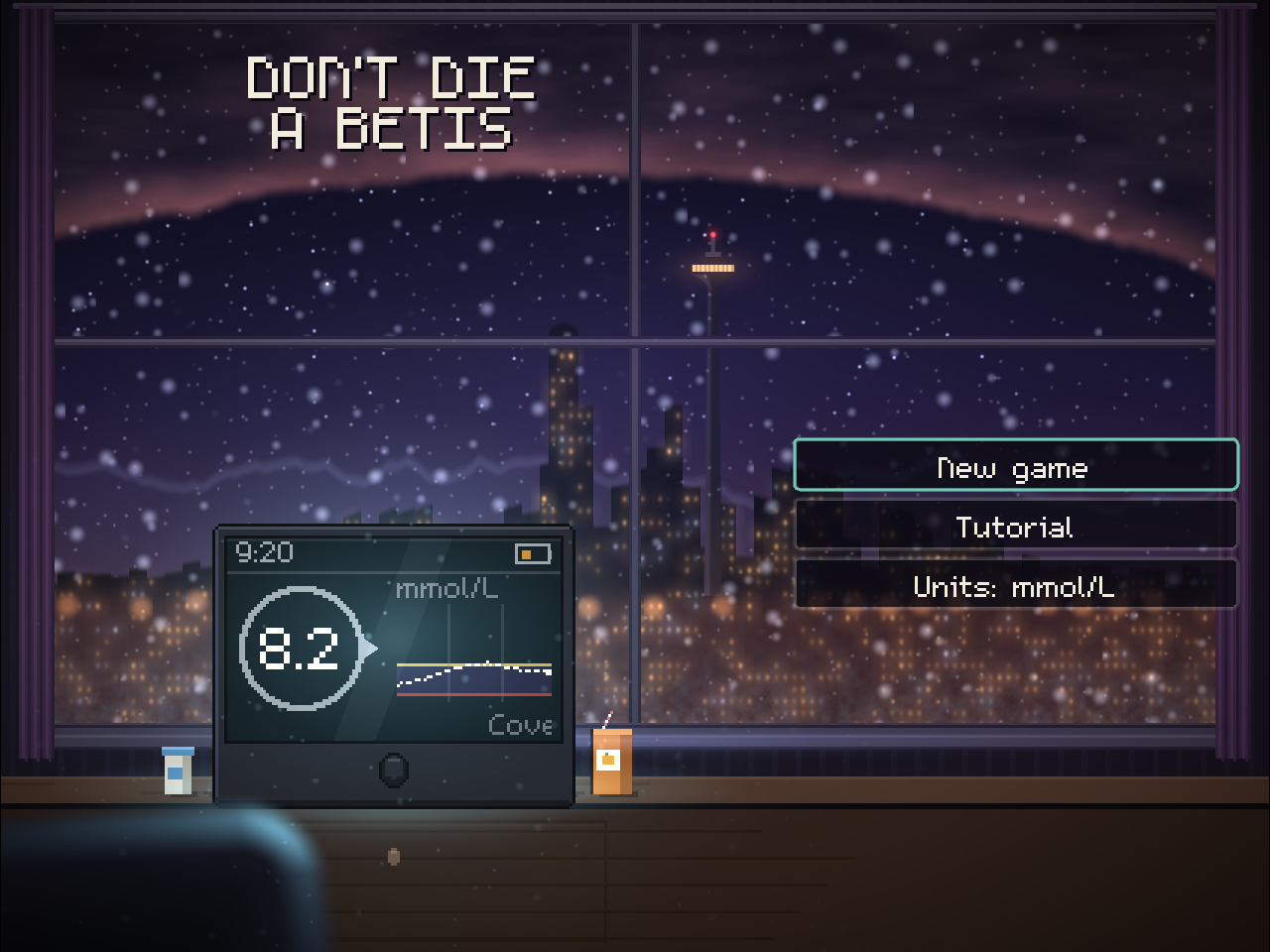
Don't Die a Betis
A beat 'em up about type 1, set in Calgary. Count carbs, dodge the Cinnamon Guy, and find a washroom before it is too late.
Play in your browserRead the instruction booklet.
Why you check
Blood sugar, or blood glucose, is the amount of sugar in your blood at a given moment. It comes from the carbohydrate you eat, and from your liver, which releases sugar during sleep or exercise.
Checking often tells you if you are low or high, so you can act. It also shows how your meals, activity and insulin affect your numbers. Over time, your records help you and your team adjust your plan.
There are two ways to check: a finger prick with a blood sugar meter, or a continuous glucose monitor (CGM), a sensor worn on the skin.
How to do a finger check
A meter reads a drop of blood on a test strip. You prick your finger with a lancet, a small needle held in a pen-sized holder. Meters are sold at most pharmacies, and your diabetes educator can show you how to use yours.
Gather your meter, lancet holder, test strips and a cotton ball. Check that the strips are not past their expiry date, because old strips can give wrong results.
Wash your hands with warm, soapy water and dry them well.
Put a new lancet in the holder. Take out one strip, close the bottle right away, and put the strip in the meter.
Prick the side of your fingertip. Any finger will do.
Touch the drop of blood to the strip. Make sure there is enough blood to cover the test area.
Read and record the result. Write down the number, the time, and when you last ate. Press on your fingertip with the cotton ball if it keeps bleeding.
Put used lancets in a sharps container. Some meters need a code that matches the strip bottle; your meter's instructions will say.
Blood sugar targets
Diabetes Canada gives these targets for most people with diabetes, including adults with type 1. Your own targets may be different. Ask your team what yours should be.
| Measure | Target |
|---|---|
| Before meals, and fasting (first thing in the morning) | 4.0 to 7.0 mmol/L |
| Two hours after eating | 5.0 to 10.0 mmol/L (5.0 to 8.0 mmol/L if your A1C target is not being met) |
| A1C | 7.0% or less |
| Low blood sugar | below 3.9 mmol/L: treat it straight away |
Targets are set differently for children and teens, during pregnancy, and for older adults. Pregnancy targets are tighter. If you are caring for a child with type 1, or you are pregnant or planning a pregnancy, your team will give you targets for that situation.
If you are low, see Treating a low. If you are high, see Highs and ketones.
When to check
How often you check depends on your treatment plan, so talk to your team about it. For people who take insulin more than once a day, Diabetes Canada's guidelines recommend checking at least three times a day, both before and after meals.
Check more often:
- right away, whenever you feel low
- four times a day or overnight, if you are having lows or your A1C is not at target
- during the night, if you often wake up with high blood sugar, to find out why
- when you are sick: every 2 to 4 hours (see Sick days)
Bring your records, or your meter or app, to every appointment.
Sensors and time in range
A continuous glucose monitor (CGM) is a small sensor held on the skin, often on the upper arm, with a thin wire just under the skin. It measures your sugar without finger pricks and sends the readings to a phone app. Some connect to an insulin pump and give readings all day and night.
With a CGM, you and your team can look at your time in range: the share of the day your sugar is in your target range. For most adults with type 1 or type 2 diabetes, Diabetes Canada's guidelines suggest these targets:
| Range | Blood sugar | Target share of the day |
|---|---|---|
| Below range | below 3.9 mmol/L | less than 4% |
| In range | 3.9 to 10.0 mmol/L | more than 70% |
| Above range | above 10.0 mmol/L | less than 25% |
More time in range means better blood sugar control. Diabetes Canada's guidelines note that about 70% time in range matches an A1C of about 7.0%. See Continuous glucose monitors for more about sensors.
What A1C is
A1C is a blood test that shows your average blood sugar over the last 2 to 3 months. It tells you whether your blood sugar has been high over time, not just on one day.
For most adults with type 1, the target is 7.0% or less. Diabetes Canada now recommends an A1C below 7.0% for children of all ages too, set with each family. Your team will tell you your own target.
Diabetes Canada suggests having your A1C measured every 3 months if you are not meeting your targets or have changed how you manage your diabetes. A CGM app may also show a glucose management indicator, an estimate of your A1C from the sensor readings.
Follow your own diabetes care team. This page explains the general advice. Your doctor, nurse educator and dietitian know your body and your insulin, and their plan comes first.
Sources
- Diabetes Canada. Checking blood sugar.
- Diabetes Canada Clinical Practice Guidelines. Chapter 9: Blood glucose monitoring in adults and children with diabetes, 2021 update.
- Diabetes Canada Clinical Practice Guidelines. Chapter 41: Glycemic management across the lifespan for people with type 1 diabetes (2025).
- HealthLink BC. Diabetes: checking your blood sugar.
- Diabetes Canada. Hypoglycemia: low blood sugar in adults (patient handout, 2024).
Checked against these sources in November 2026.