Sick and getting worse
Vomiting or diarrhea two or more times in 4 hours: call your doctor or go to the emergency department. Trouble breathing, confusion or trouble staying awake: call 911.
Featured partnerFREE TO PLAY
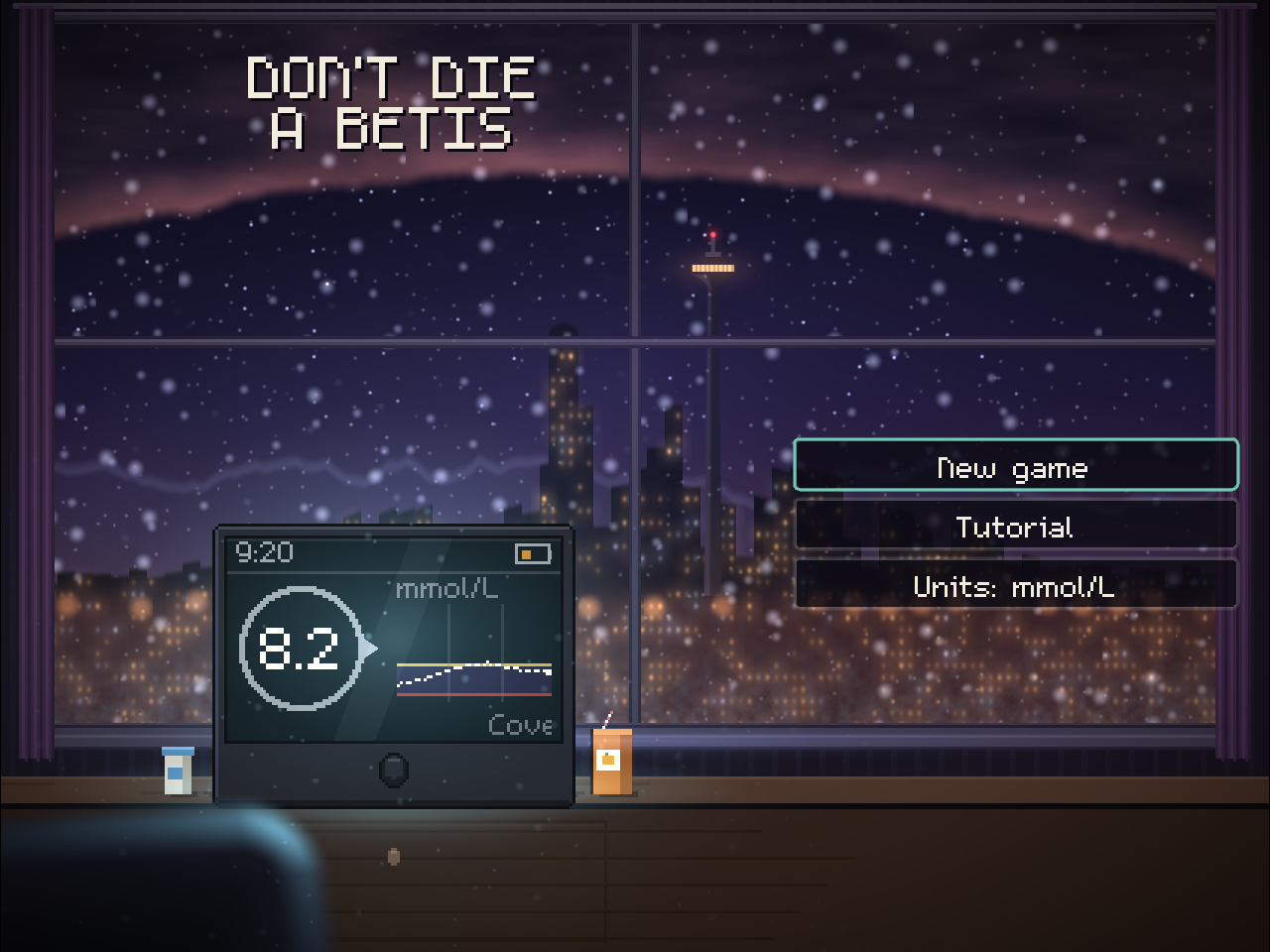
Don't Die a Betis
A beat 'em up about type 1, set in Calgary. Count carbs, dodge the Cinnamon Guy, and find a washroom before it is too late.
Play in your browserRead the instruction booklet.
Why being sick raises blood sugar
When you are sick with the flu or another illness, your body makes stress hormones to fight it. These hormones make your liver release extra sugar, and they make your insulin work less well.
So your blood sugar can go up even if you are eating less than usual. Without enough insulin, your body starts to burn fat for energy and makes ketones. In type 1, this is how a cold or a stomach bug can turn into diabetic ketoacidosis (DKA). See Highs and ketones.
Children with type 1 can get very high blood sugar from a minor illness. Watch a sick child closely.
Make a sick-day plan before you need it
Write a sick-day plan with your diabetes team while you are well. Diabetes Canada recommends it should cover:
- which of your medicines to keep taking, and which to stop for a while
- how to adjust your insulin when you are sick
- when to call your team, and when to go to the emergency department
Also ask your team which blood sugar and ketone numbers they want you to act on, and how to reach them at night and on weekends. Keep the plan somewhere easy to find, and tell your family where it is.
Keep ketone strips at home and check their expiry date. Urine strips go bad once the container has been open for more than 6 months.
On a sick day
Keep taking your insulin. Never stop your basal (background) insulin, even if you are not eating or are throwing up. If you are vomiting and can't take your usual doses, call your team. Follow your sick-day plan for any changes to your doses.
Check your blood sugar every 2 to 4 hours, and more often, through the night too, if it is rising fast. Keep checking even if you are not eating.
Check for ketones, also every 2 to 4 hours, especially if your blood sugar is high or you are vomiting or have belly pain or a fever. Blood ketone testing is preferred over urine strips.
Drink plenty of water or sugar-free fluids. Avoid coffee, tea, energy drinks and pop that contain caffeine.
Write it down. Note your blood sugar, ketones, insulin doses and what you have eaten and drunk, so you can tell your team exactly what has happened.
If you can't eat
Try to eat your usual foods. If you can't, you still need some carbohydrate. Diabetes Canada says to drink fluids that contain sugar, aiming for about 15 g of carbohydrate from drinks every hour.
HealthLink BC lists light foods and drinks with roughly 10 to 15 g of carbohydrate each, such as:
- ½ cup (125 mL) of 100% fruit juice
- ¾ cup (175 mL) of regular pop
- 1 popsicle, or ½ cup of regular jelly dessert
- ½ cup of unsweetened applesauce
- 1 slice of bread or toast, or 7 soda crackers
Soup and milk also count toward your fluids.
Medicines
- Ask a pharmacist before taking cold, cough or flu medicine. Many non-prescription medicines can affect your blood sugar. Choose sugar-free products when you can.
- Ask your team which of your other medicines to pause. Your sick-day plan should say which ones to keep taking and which ones to stop for a while.
- If you take an SGLT2 inhibitor along with insulin, ask your team what to do with it on sick days. DKA can happen with these medicines even when blood sugar is not very high.
When to call your team, and when to go to emergency
Call your diabetes team if:
- you are vomiting and can't take your usual insulin
- your blood sugar stays high despite following your plan
- you have ketones, or your blood ketones are 0.6 mmol/L or more while you are sick
- you don't have a sick-day plan for adjusting your insulin
Get help now
- Call your doctor or go to the emergency department if you vomit or have diarrhea two or more times in 4 hours.
- Call your team right away, and be ready to go to emergency, if your blood ketones are above 3.0 mmol/L or your urine ketones are large. This is a medical emergency.
- Go to emergency or call 911 for signs of DKA: vomiting with belly pain, fast or deep breathing, fruity breath, confusion, or trouble staying awake.
Emergency: 911
Follow your own diabetes care team. This page explains the general advice. Your doctor, nurse educator and dietitian know your body and your insulin, and their plan comes first.
Sources
- Diabetes Canada Clinical Practice Guidelines. Chapter 15: Hyperglycemic emergencies in adults.
- Diabetes Canada. Checking blood sugar (section "Managing your blood sugar when you're ill").
- HealthLink BC. Sick-day guidelines for people with diabetes (2023).
- Breakthrough T1D Canada. Diabetic ketoacidosis (DKA) and ketones.
- Alberta Health Services. Diabetes, insulin and sick day management (2018).
- HealthLink BC. Diabetic ketoacidosis (DKA) (2023).
Checked against these sources in November 2026.