If someone can't swallow or won't wake up
Don't give them food or drink. Give glucagon if you have it and know how, and call 911.
Featured partnerFREE TO PLAY
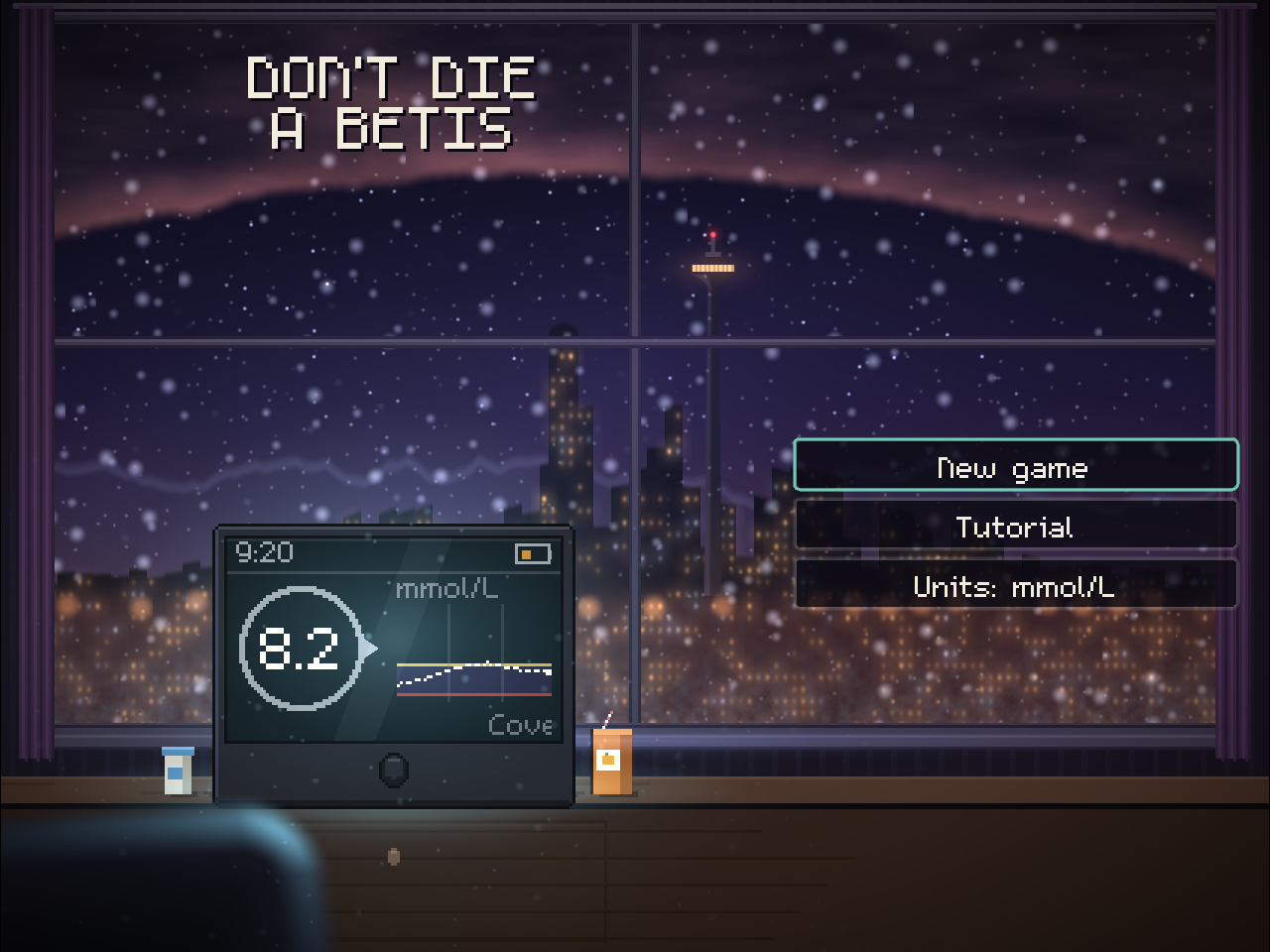
Don't Die a Betis
A beat 'em up about type 1, set in Calgary. Count carbs, dodge the Cinnamon Guy, and find a washroom before it is too late.
Play in your browserRead the instruction booklet.
What the honeymoon phase is
After starting insulin, some people have a stretch when their insulin needs are lower than expected. Diabetes Canada's guidelines call this the honeymoon period.
Not everyone has one. In adults it usually lasts weeks to months. In children, Diabetes Canada's guidelines say it can last up to 2 years after diagnosis, and during it blood sugar is often easier to keep in target on less insulin.
When insulin needs drop
During the honeymoon period your numbers may stay in range on smaller doses than expected. That can feel like good news. It also means your plan may need changing more often than usual.
Your team expects this and will adjust your doses. Tell them about your readings, especially any lows. Only change your own doses in the way your team has shown you.
Watch for lows
A low happens when there is more insulin working than your body needs. If your needs fall and your doses stay the same, you may go low more often.
- Keep fast-acting sugar with you at all times.
- Learn the signs of a low and how to treat it. See Treating a low.
- Tell your team about every low, or keep a record to show them, so they can adjust your plan.
- Make sure you have glucagon and that the people around you know how to use it.
It ends
The honeymoon period is temporary. When it ends, your insulin needs change again, and your team will adjust your plan with you.
A honeymoon period does not mean the diabetes is going away. Type 1 can't be cured yet, and people do not grow out of it. If your needs rise again, it does not mean you have done something wrong.
Keep taking insulin
People with type 1 depend on insulin to survive, including during the honeymoon period. Missing insulin doses, or not taking enough, can lead to diabetic ketoacidosis (DKA), an emergency. Even if your doses are small, keep taking your insulin as your team directs. Do not stop it on your own.
If you have questions about your doses, ask your team. Useful ones are: how will I know my needs are changing, what should I do about repeated lows, and when should I call you?

Try playing Don't Die a Betis.
Play in your browserFollow your own diabetes care team. This page explains the general advice. Your doctor, nurse educator and dietitian know your body and your insulin, and their plan comes first.
Sources
- Diabetes Canada Clinical Practice Guidelines. Chapter 12: Glycemic management in adults with type 1 diabetes.
- Diabetes Canada Clinical Practice Guidelines. Chapter 34: Type 1 diabetes in children and adolescents.
- Diabetes Canada Clinical Practice Guidelines. Chapter 14: Hypoglycemia in adults, 2023 update.
- Diabetes Canada. Hypoglycemia: low blood sugar in adults (patient handout, 2024).
- Diabetes Canada. Signs and symptoms.
- Breakthrough T1D Canada. What is type 1 diabetes?
Checked against these sources in November 2026.