Signs of DKA need help right away
Very thirsty, very weak, peeing a lot, short of breath, sick to the stomach, vomiting or belly pain, with high blood sugar: get medical help immediately. If the person is confused, very drowsy or struggling to breathe, call 911.
Featured partnerFREE TO PLAY
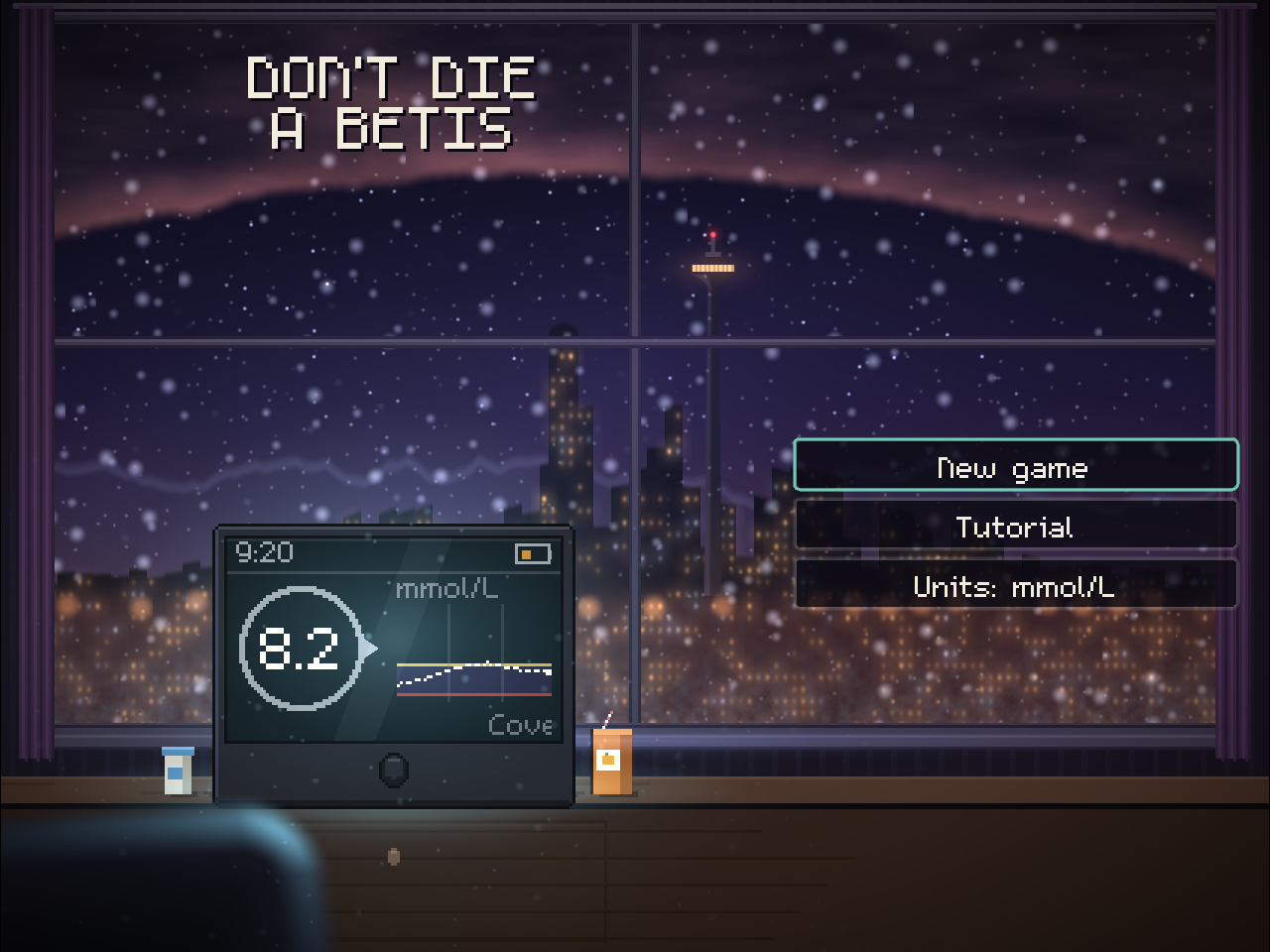
Don't Die a Betis
A beat 'em up about type 1, set in Calgary. Count carbs, dodge the Cinnamon Guy, and find a washroom before it is too late.
Play in your browserRead the instruction booklet.
What happens in the body
Type 1 diabetes is a long-term autoimmune condition. The immune system, which normally fights infections, attacks the beta cells in the pancreas by mistake. Beta cells are the cells that make insulin.
This attack often starts months or years before there are any clear symptoms. Type 1 is diagnosed when the pancreas can no longer make enough insulin and blood sugar rises.
Type 1 can start at any age. It usually develops in children, but adults get it too. It can run in families, but 85 to 90 per cent of people diagnosed have no family history of it.
Why insulin is needed for life
Insulin is a hormone made by the pancreas. It lets the body use the sugar (glucose) from the carbohydrates you eat for energy. Without insulin, sugar cannot get into the body's cells. It builds up in the blood instead, and over time high blood sugar can damage blood vessels.
Because the pancreas no longer makes enough insulin, people with type 1 depend on insulin from injections or an insulin pump to survive. Most people also check their blood sugar several times a day, with finger checks or a continuous glucose monitor (CGM), a small sensor worn on the body.
Type 1 is not contagious, and people do not grow out of it. There is no cure and no way to prevent it yet. It can be managed, and your diabetes care team will teach you how.
How type 1 differs from type 2
Both types mean too much sugar in the blood, but the cause is different.
| Type 1 | Type 2 | |
|---|---|---|
| What happens | The immune system destroys the cells that make insulin, so the body cannot make its own. | The pancreas does not make enough insulin, or the body does not use its insulin well (insulin resistance). |
| How common | About 5 to 10 per cent of people with diabetes | About 90 to 95 per cent of diabetes in Canada |
| Insulin | Needed every day, by injection or pump | Depends on the person; ask their own team |
People often mix the two up. If someone gives you advice meant for type 2, it may not apply to you.
It is not your fault
Type 1 is not caused by diet or lifestyle. Eating sugar did not cause it, and nothing you or your parents did or did not do caused it. Researchers do not yet know exactly what sets off the immune attack.
Many people, and many parents, ask what they could have done differently. The answer is nothing. There is no known way to prevent type 1.
The signs at diagnosis
Common signs that lead to a type 1 diagnosis include:
- being very thirsty, with a dry mouth, and peeing more often
- weight loss, often with more hunger than usual
- feeling very tired, drowsy or low on energy
- blurred vision
- infections that keep coming back, such as yeast infections, and cuts that heal slowly
- itchy skin
- fruity-smelling breath, nausea or vomiting, and laboured breathing
The last group are signs of high ketones and of diabetic ketoacidosis (DKA), an emergency that can happen when the body does not have enough insulin. If you are worried about any of these signs in yourself or your child, see a doctor right away. Signs of DKA need medical help immediately.
What A1C means
A1C is a blood test that shows your average blood sugar over the last 2 to 3 months. A finger check tells you about this moment. An A1C tells you how things have gone over time.
For most adults with diabetes, Diabetes Canada's target is an A1C of 7.0% or less. For children and teens under 18, the guideline target is 7.5% or less. Your team may set a different target for you, so ask what yours is.
Diabetes Canada's guidelines suggest an A1C test about every 3 months for most people, and sometimes more often when treatment changes.
An A1C does not replace your daily checks. For daily targets, see Checking your blood sugar.

Try playing Don't Die a Betis.
Play in your browserFollow your own diabetes care team. This page explains the general advice. Your doctor, nurse educator and dietitian know your body and your insulin, and their plan comes first.
Sources
- Breakthrough T1D Canada. What is type 1 diabetes?
- Breakthrough T1D Canada. Signs & symptoms.
- Diabetes Canada. Type 1 diabetes.
- Diabetes Canada. Type 2 diabetes.
- Diabetes Canada. Signs and symptoms.
- Diabetes Canada. Checking your blood sugar.
- Diabetes Canada Clinical Practice Guidelines. Chapter 8: Targets for glycemic control.
- Diabetes Canada Clinical Practice Guidelines. Chapter 9: Blood glucose monitoring in adults and children with diabetes, 2021 update.
- Diabetes Canada Clinical Practice Guidelines. Chapter 34: Type 1 diabetes in children and adolescents.
Checked against these sources in November 2026.