Featured partnerFREE TO PLAY
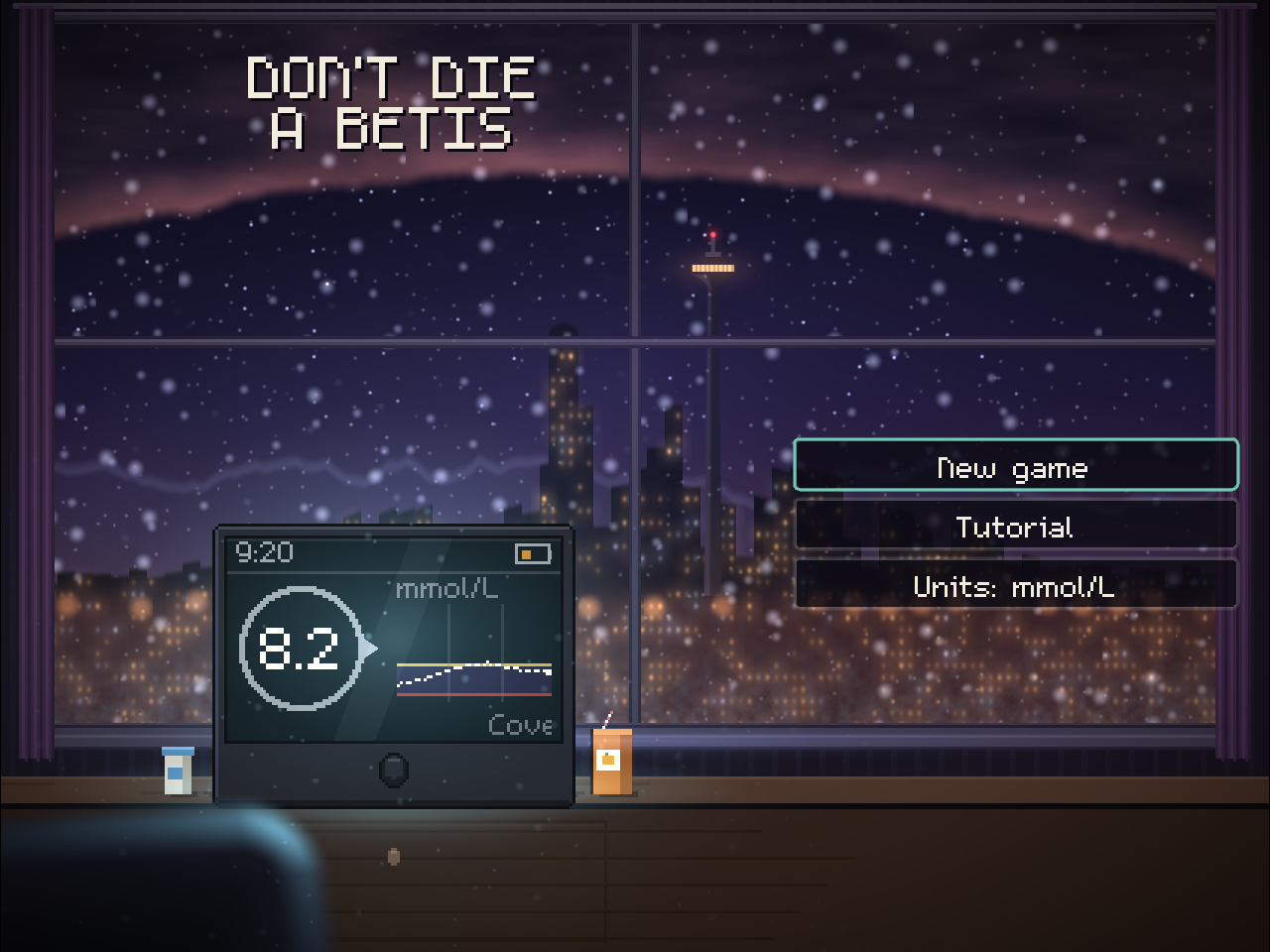
Don't Die a Betis
A beat 'em up about type 1, set in Calgary. Count carbs, dodge the Cinnamon Guy, and find a washroom before it is too late.
Play in your browserRead the instruction booklet.
Where to start
Coverage for diabetes devices is run by each province and territory, and each one has its own rules. The rules change, so check your province's own pages before you buy anything.
Your diabetes clinic is the best first stop. Most programs need a form from your doctor, nurse practitioner or clinic, and in some provinces you must be approved before you buy the device, or you pay the full cost yourself.
Breakthrough T1D Canada keeps a province-by-province coverage map for pumps and CGMs. This page covers Alberta, British Columbia and Ontario in more detail, because we could check those against government pages.
Insulin pump programs
Alberta
The Alberta Insulin Pump Therapy Program covers a pump and its supplies for Alberta residents with type 1 (or type 3c) diabetes who are covered by the Alberta Health Care Insurance Plan and under the care of a doctor or nurse practitioner. Alberta Health Services runs it through approved pump clinics, and Alberta Blue Cross handles the claims.
To get in, you:
go to a pre-pump information session arranged through a clinic
are assessed by the clinic team, who check you meet the program's clinical criteria
complete an education plan, including a pump learning course
sign a Patient Responsibility Form; the clinic then faxes an Eligibility Notification Form to Alberta Blue Cross
receive a Confirmation Letter by mail, which tells you what is covered and how to get your pump
Once you are in, the program covers a pump every five years and set amounts of supplies, such as 100 infusion sets per 100 days. Adults have a review at the clinic every year, and children every six months. Enrolment doesn't guarantee coverage forever: you have to keep meeting the criteria.
British Columbia
BC PharmaCare covers pumps for people with type 1, or another kind of diabetes that needs insulin, who have Fair PharmaCare or certain other PharmaCare plans. Your endocrinologist or diabetes specialist sends PharmaCare a Special Authority request. Wait for the approval letter before you buy the pump. Pods, infusion sets and reservoirs don't need pre-approval. On Fair PharmaCare, you pay until you reach your deductible, and then PharmaCare covers 70% of eligible costs.
Ontario
Ontario's Assistive Devices Program covers 100% of its set price for a pump for people with type 1 who meet the medical criteria, plus up to $2,400 a year for supplies, paid in $600 amounts every three months. Income is not considered. You are assessed by a Diabetes Education Program registered with the program, and the application goes in before you buy. The program aims to review applications within 8 weeks. You renew supply coverage every year.
CGM coverage
Alberta
Alberta covers CGMs for people enrolled in one of its government-sponsored health benefit plans, such as Non-Group Coverage or Coverage for Seniors. You get the CGM from a pharmacy.
- Under 18: diagnosed with diabetes and on any ongoing insulin or pump therapy.
- 18 and older: diagnosed with diabetes and on a pump, on basal and bolus insulin, or on premixed insulin.
Coverage is limited to one make of CGM, and a set number of sensors each benefit year. If you get a CGM this way, your coverage for test strips goes down, so plan for the occasional finger check. Alberta Blue Cross checks the past 8 months of your prescription claims for insulin. If you are new to insulin, or your insulin was paid by a private plan, an eligible claim may be rejected at first, and the pharmacist then resubmits it with a code that says you qualify.
British Columbia
BC PharmaCare covers CGMs and scanned glucose monitors through Special Authority, which your prescriber applies for. You must agree to diabetes education and regular follow-up. The first approval lasts 3 years, and a renewal lasts 5. CGM users are covered for 200 test strips a year.
Ontario
Ontario's Assistive Devices Program covers real-time CGM sensors and transmitters, up to a set number over 24 months, for people with type 1 who meet the medical criteria. You renew every 2 years.
Other provinces and territories
Coverage varies by province and territory, and it has been changing often. Check your provincial drug plan (see the Resources page for links) or the Breakthrough T1D Canada coverage map.
Special Authorization in Alberta
Some drugs and devices on Alberta's government plans are covered only by Special Authorization. That means Alberta Blue Cross has to approve your coverage before it pays. For example, adults who want coverage for one make of CGM that pairs with certain pumps need Special Authorization.
- Your doctor sends the request to Alberta Blue Cross.
- If it is approved, coverage starts from the beginning of the month in which Alberta Blue Cross received the request.
- Approval lasts for a set period, which depends on the drug or device. Your approval notice tells you how long.
- If you still need it after that, you and your doctor apply again before the approval runs out. Some products renew automatically, as long as you have made a claim during the approval period.
Put the expiry date in your calendar, with a reminder a few weeks before it.
Private and workplace plans
If you have a health plan through work, school or a family member, it may cover pumps, CGMs, supplies or insulin. Plans differ a lot. Before you buy, ask your plan what it covers, how much, how often, and what forms it needs. Some provincial programs, such as Alberta's CGM coverage, are only for people on a government plan, so the two can work differently.
The Disability Tax Credit
The Disability Tax Credit is a federal tax credit that can lower the income tax paid by a person with a disability, or by a family member who supports them. The Canada Revenue Agency says people with type 1 diabetes are deemed to meet its criteria for life-sustaining therapy, so you don't have to show how many hours a week you spend on it.
You still have to apply. Send Form T2201, the Disability Tax Credit Certificate, to the Canada Revenue Agency using its digital application or by mail. You fill in one part, and a medical practitioner, such as your doctor or nurse practitioner, fills in the other. See the Disability Tax Credit page on canada.ca.
National pharmacare
The federal government has signed pharmacare funding agreements with four provinces and territories: Manitoba, British Columbia, Prince Edward Island and Yukon. In those places, people with diabetes will generally get some diabetes medications free at the pharmacy, including insulin. The agreements also help pay for supplies such as insulin pumps, syringes, glucose monitors and test strips.
How and when this works is up to each province or territory, so check with yours. No other province or territory, including Alberta and Ontario, was listed when we checked.
Keeping the paperwork moving
- Ask your clinic which program you qualify for before you choose a device.
- Get approval before you buy. In BC and Ontario, buying first can mean paying the full cost.
- Keep copies of every form, letter and approval notice, with the dates.
- Note when each approval or renewal runs out, and start the renewal early.
- If a claim is rejected, ask why, and ask your pharmacist or clinic to help. As the Alberta CGM example above shows, an eligible claim can be rejected the first time.
Follow your own diabetes care team. This page explains the general rules. Your clinic knows which programs you qualify for, and their advice comes first.
Sources
- Government of Alberta. Insulin Pump Therapy Program: eligibility criteria (2023).
- Alberta Health Services. Insulin Pump Therapy Program: clinical criteria (2019).
- Government of Alberta. Specialized drug benefits.
- Government of Alberta. Continuous glucose monitor coverage for Albertans (fact sheet, 2025).
- Alberta Blue Cross. Pharmacy Benefact 1225: continuous glucose monitors for adults (2024).
- Alberta Blue Cross. Alberta Drug Benefit List: Special Authorization guidelines (2025).
- Government of British Columbia. Insulin pumps and supplies.
- Government of British Columbia. Glucose monitors (2026).
- Government of Ontario. Diabetes equipment and supplies (2026).
- Breakthrough T1D Canada. Coverage map.
- Canada Revenue Agency. Disability tax credit (DTC) (2026).
- Canada Revenue Agency. Disability-related information (2026).
- Health Canada. About national pharmacare (2026).
- Health Canada. National pharmacare bilateral agreements (2026).
Checked against these sources in November 2026.